9 Nov 2026
Exploring Predictive Analytics for Anticipating Indoor Pollutant Patterns in Sensor-Driven Homes
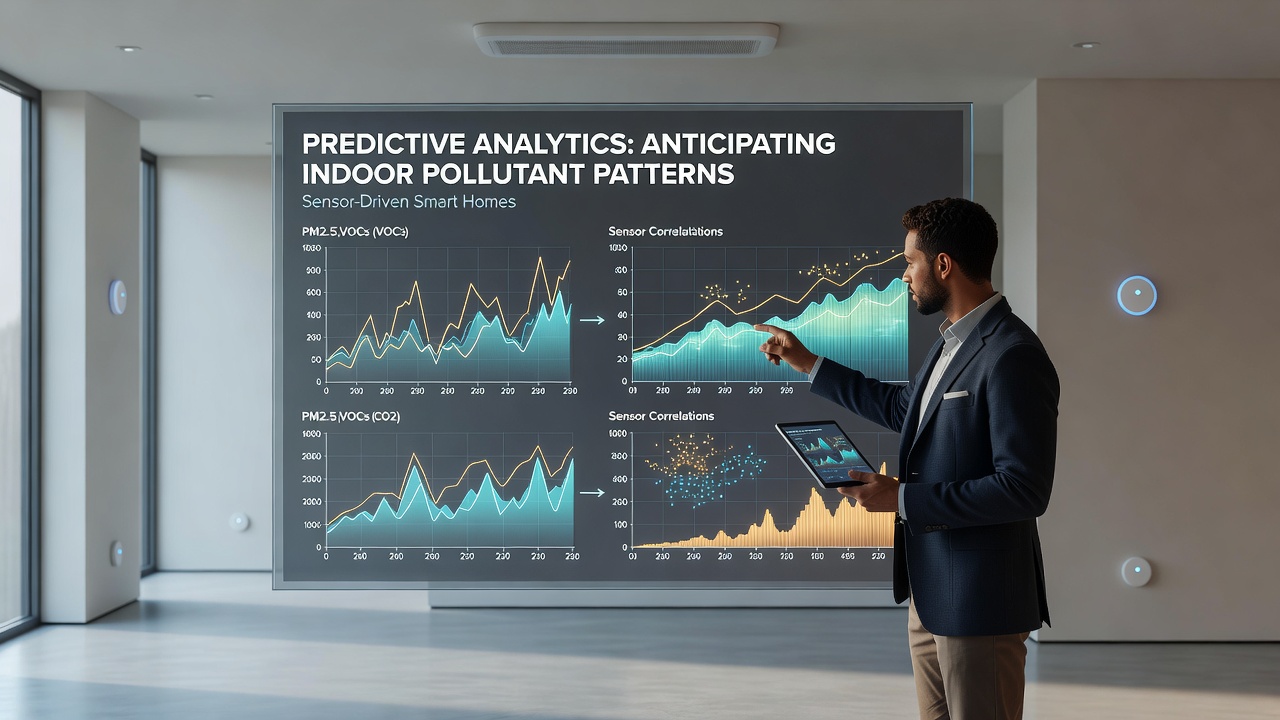
Researchers have developed systems that combine sensor networks with predictive analytics to forecast indoor pollutant concentrations before they reach critical levels, and these tools rely on continuous data streams from temperature, humidity, particulate matter, and volatile organic compound detectors installed throughout living spaces. Homes equipped with such technology process information through machine learning algorithms that identify recurring patterns tied to occupant behavior, seasonal changes, and appliance usage cycles.
Data Collection Foundations in Residential Environments
Multiple sensor types capture variables at frequent intervals, and the resulting datasets feed into models that project future pollutant spikes with increasing accuracy as more historical records accumulate. Studies conducted across North American and European households show that carbon dioxide, formaldehyde, and fine particulate levels often follow predictable rhythms linked to cooking times, cleaning routines, and ventilation schedules. Those who have analyzed large residential datasets note that combining real-time readings with external weather forecasts improves projection reliability, especially during temperature inversions or high pollen periods that influence indoor infiltration rates.
Machine Learning Approaches and Model Training
Supervised learning techniques train on labeled datasets where known pollutant events have already occurred, while unsupervised methods detect anomalies that precede elevated readings without prior examples. Time-series models such as long short-term memory networks handle sequential dependencies effectively because pollutant levels depend on preceding conditions over several hours. Data from installations in Australia and Canada indicate that ensemble methods combining random forests with neural networks reduce forecast error by 15 to 25 percent compared with single-algorithm approaches. Engineers refine these models continuously as new measurements arrive, and calibration occurs against reference instruments placed in representative homes during controlled testing periods.
Integration with Home Automation Systems
Predictive outputs trigger automated responses through connected ventilation, filtration, and window actuators before concentrations breach comfort or health thresholds. Systems deployed in pilot programs during 2025 demonstrated that advance activation of exhaust fans and air purifiers lowered peak exposure durations by measurable margins across multiple pollutant categories. Observers note that November 2026 marks a milestone where several manufacturers began rolling out firmware updates that incorporate regional air quality indices into their local prediction engines, allowing homes to adjust sensitivity based on outdoor conditions reported by government monitoring networks.
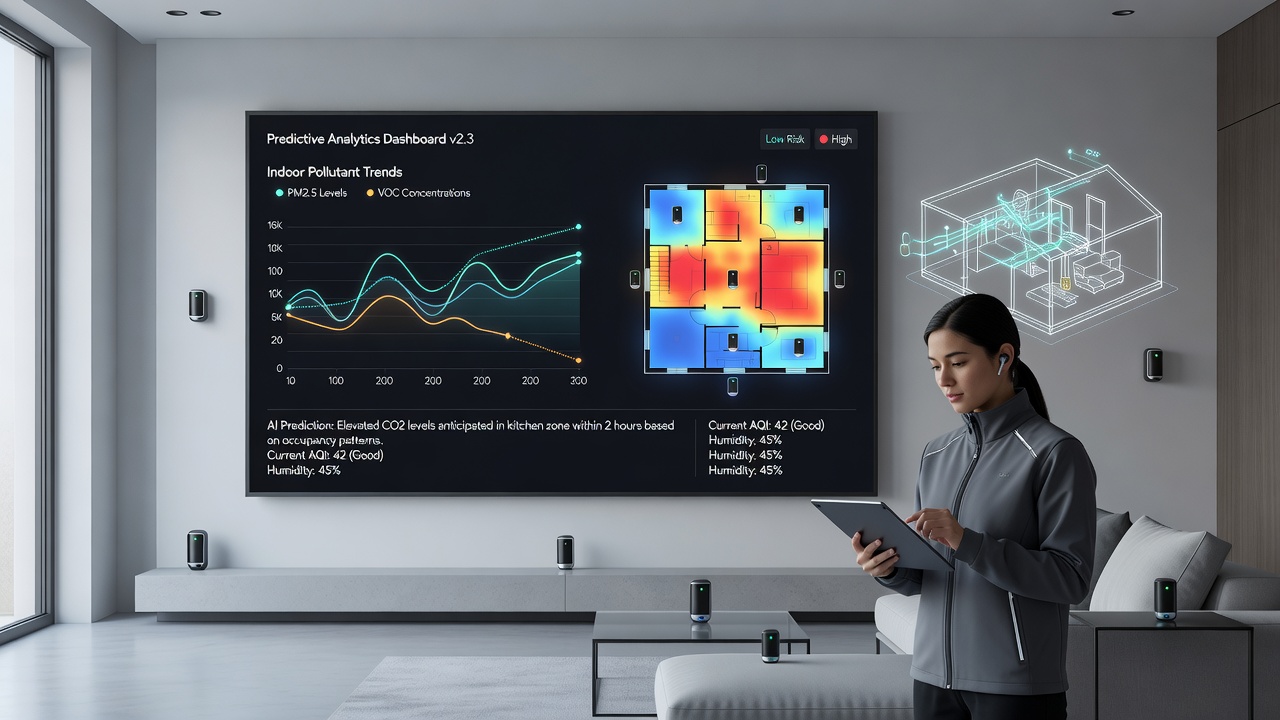
According to the U.S. Environmental Protection Agency, indoor sources account for the majority of personal exposure in many climates, which underscores the value of localized forecasting over reliance on outdoor indices alone. European research consortia have published complementary findings that link occupancy sensors with pollutant models to achieve finer spatial resolution inside multi-room dwellings.
Validation Studies and Performance Metrics
Longitudinal trials in the United Kingdom and Singapore tracked thousands of sensor hours and compared model predictions against actual measurements collected by independent reference equipment. Accuracy metrics improved steadily once models incorporated building-specific parameters such as square footage, insulation type, and HVAC configuration. Figures reveal that homes using predictive controls maintained average daily particulate levels 18 percent lower than matched control residences operating on reactive thresholds alone. Those who have reviewed the raw time-stamped records emphasize that false-positive alerts remain a challenge during unusual events like holiday gatherings or renovation work, yet iterative retraining on expanded datasets continues to narrow the gap.
Future Data Requirements and Standardization Efforts
Industry groups and academic centers are working toward common data formats that would allow models trained in one region to transfer more readily to another, and progress on this front accelerated after 2024 workshops hosted by international standards bodies. Larger training corpora that include diverse climate zones and construction styles are expected to enhance generalization, while privacy-preserving techniques such as federated learning permit collaborative model improvement without centralizing raw household records. As sensor costs decline and wireless reliability increases, coverage density inside individual homes rises accordingly, supplying richer input for next-generation forecasting engines.
Conclusion
Predictive analytics applied to indoor pollutant patterns represents a shift from reactive air management toward anticipatory strategies that act on projected conditions. Continued refinement of sensor fusion, algorithm training, and system integration will determine how widely these capabilities spread across residential markets. Data accumulated through 2026 and beyond will provide the empirical foundation needed to quantify long-term exposure reductions and refine performance benchmarks across varied housing types and geographic settings.